Infrastructure & Capabilities

Every Process In-House. Every Stage Under Our Control.

A printed pouch passes through half a dozen critical operations before it holds product: pre-press, printing, lamination, curing, slitting, pouching, and inspection. Most converters own two or three of these and subcontract the rest — which is where colour drifts, delamination creeps in, and delivery dates slip.

At Vee Printers, every one of these operations runs on our own floor in Pune. One quality standard applies from artwork to dispatch, and one team answers for the result.

How We Print

Rotogravure

For Long Runs and Uncompromising Consistency

Rotogravure is the reference process for high-volume flexible packaging. The image is engraved directly into a chrome-plated steel cylinder as millions of microscopic cells. Each cell carries a metered dose of ink onto the film — there is no plate to wear, no blanket to degrade.

  • Repeatability across the run. The colour approved on day one is the colour delivered in every subsequent batch.
  • True photographic reproduction. Variable cell depth lays down genuinely variable ink density — smooth vignettes, dense solids, fine skin tones.
  • Speed at scale. Gravure runs fast on wide webs, which is what makes large FMCG volumes economical.
  • Direct printing on demanding films. Handles polyester, BOPP, and barrier films with inks formulated for lamination strength and product resistance.

Our gravure lines print the reverse-printed laminates used across our pouch range — the ink is trapped between film layers, so the print cannot scuff, scratch, or contact the product.
Flexography

Versatility and Fast Changeover

Flexo prints from flexible photopolymer plates mounted on cylinders, with ink metered by a precision-engraved anilox roller. Where gravure is the marathon runner, flexo is the all-rounder.

  • Substrate range. Prints cleanly on films, papers, label stocks, and bag materials — the plate conforms to the surface.
  • Economical plates and quick job changes. Photopolymer plates cost a fraction of engraved cylinders and mount quickly.
  • Modern print quality. Current plate and anilox technology puts flexo close to gravure on most designs, at materially lower tooling cost.

Our flexo machines carry much of our label and bag production, giving clients a genuine choice of process matched to run length rather than a one-machine compromise.

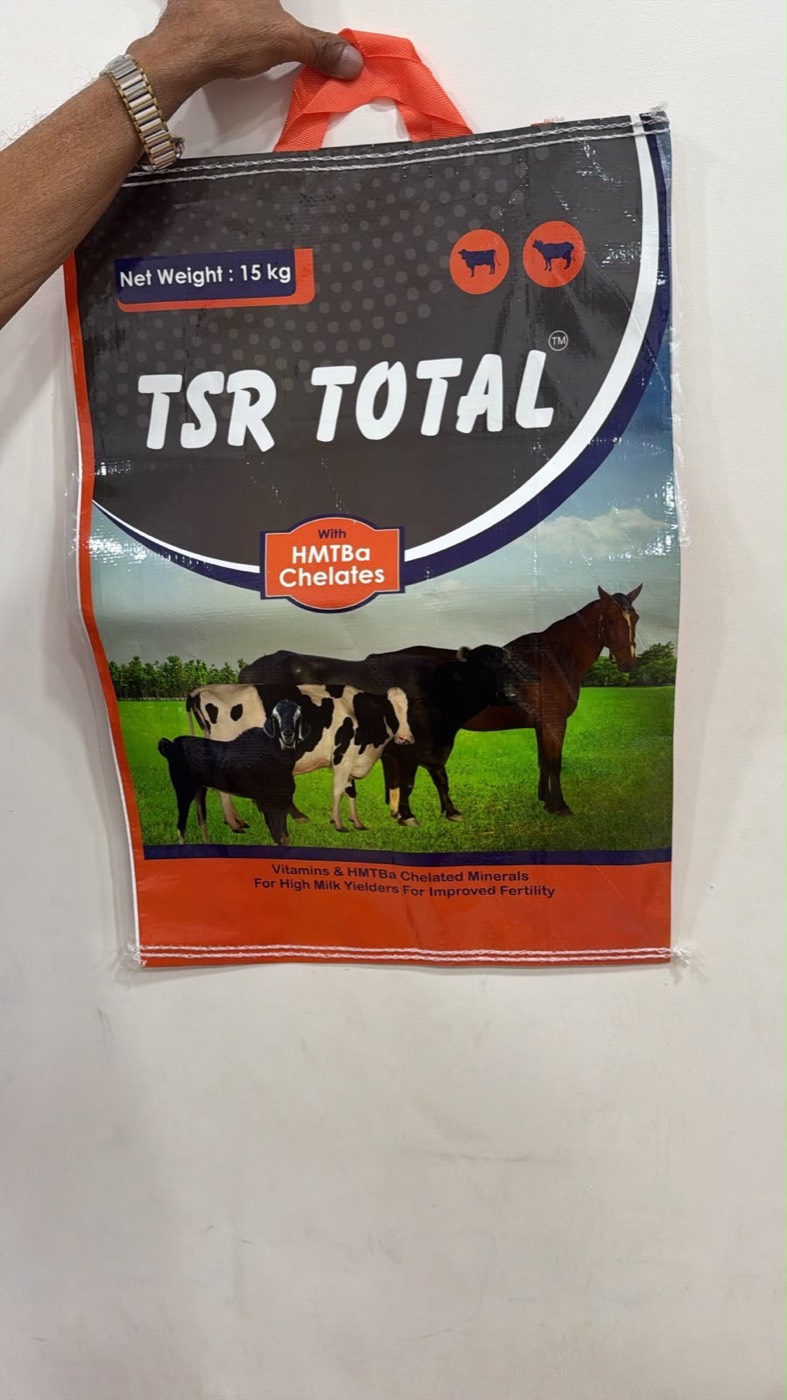
BOPP bag produced on cylinder-free pouch-making machinery, avoiding engraving costs.
Cylinder-Free Pouch Production

Zero Cylinder Cost

Conventional gravure demands one engraved cylinder per colour. On an eight-colour design, tooling alone can cost more than a small brand's entire first order — and any artwork revision means re-engraving. Our cylinder-free pouch-making machinery eliminates that tooling entirely on select pouch lines.

  • No engraving charges. No plate charges. You pay for pouches, not for steel.
  • Short runs become viable. Trial quantities, seasonal packs, and regional-language variants at sensible cost.
  • Revisions without penalty. Change a declaration, a weight, or a design element without writing off cylinders.
  • Faster first delivery. Removing cylinder engraving shortens the path from approved artwork to filled pouch.
4-Colour Offset

Commercial Print and Cartons

Our 4-colour offset presses produce full process colour in a single pass with the sharpness offset is known for: fine text, accurate halftones, and stable ink-water balance across the run. This is the backbone of our carton, brochure, catalog, and coffee-table-book production. The 1-colour and 2-colour presses that anchored our move into offset remain in service for stationery and spot-colour work, where they remain the most economical tool for the job.

From Roll to Finished Pack

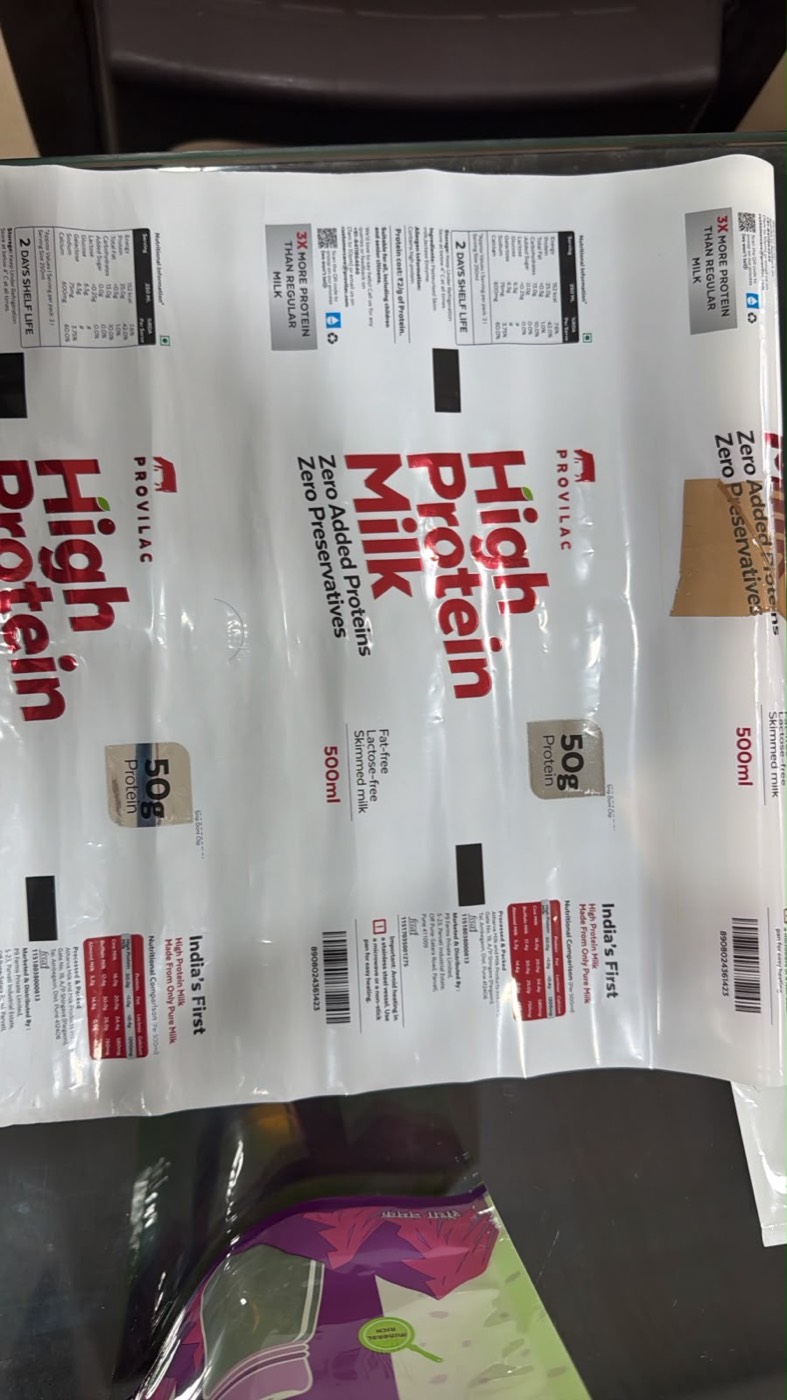
High-barrier milk packaging film supplied in roll form for form-fill-seal lines.

Barrier selection is an engineering decision, and we make it against your product's shelf-life requirement — not against what happens to be on the shelf. High-barrier structures for liquid milk and paneer, aroma-holding laminates for spices, freeze-tolerant films for frozen food, and foil-based structures where oxygen and light must be excluded entirely all come off the same in-house lamination lines.

01

Lamination & Barrier Structures

Printed films bonded into multi-layer laminates matched to the product: high-barrier for liquid milk and paneer, aroma-holding for spices, freeze-tolerant for frozen food, foil-based where oxygen and light must be excluded entirely.

02

Pouching

In-house pouch-making converts laminate rolls into finished formats: stand-up pouches with zippers, spout pouches, center seal, 3-side seal, and flat pillow packs. Seal integrity is checked on the line.

03

Bag Making

BOPP bag production from consumer sizes up to 10–50 kg feed bags, with D-cut and fabric loop handle options, stitched and finished for stacking and rough transit.

04

Carton Finishing

Die-cutting, folding, and gluing for folding and mono cartons; rigid box construction for luxury packaging; and surface finishes, including metallised Met-Pet board, that pharmaceutical and premium lines specify.

At Every Stage

In-house manufacturing is not a slogan; it is our inspection system.

Incoming film and board are checked before they reach a press. Colour is verified against approved standards on the machine, not after the run. Lamination bond strength, seal strength, and dimensional accuracy are checked before dispatch. When one team owns every stage, defects are caught where they occur — not at your filling line.

Speed, By Design

In-house control has a second benefit: speed. There is no freight between subcontractors, no queue at an outside laminator, no waiting on a third party's schedule. From artwork approval to dispatch, the job moves at our pace — which we set to meet your date.

Discuss Your Job →